Malaria & Kids: A Parent's Guide to Safe Travel Under 10
TheMothersBlock · · 2 min read
#malaria#travel#health#safety#kids
Honestly, the safest choice for a child under 10 is not to travel to a malaria area at all, unless the trip is truly unavoidable. Children are hit far harder by malaria than adults: it can go from a mild fever to a medical emergency within a day. If there’s any way to reschedule, or swap Kruger for a malaria-free reserve instead, that’s worth strongly considering first.
If the trip is going ahead, see a travel clinic or GP four to six weeks before you leave. Atovaquone-proguanil (from 11kg, in child-strength tablets) is the usual go-to for kids. Mefloquine can be used from three months or 5kg, and doxycycline is off-limits under age eight. Dosing is weight-based, so don’t guess. Get it properly prescribed.
Preventing bites, plus what moms swear by
Dress kids in long, light, loose clothing from dusk to dawn, when malaria mosquitoes bite hardest. Use a DEET, picaridin or IR3535 repellent, which are safe for kids. Rub it onto your own hands first, then onto their skin, avoiding their hands and mouth.
Beyond that, here’s what real experience adds:
• Point a fan at the cot. Mosquitoes are weak fliers and struggle in moving air.
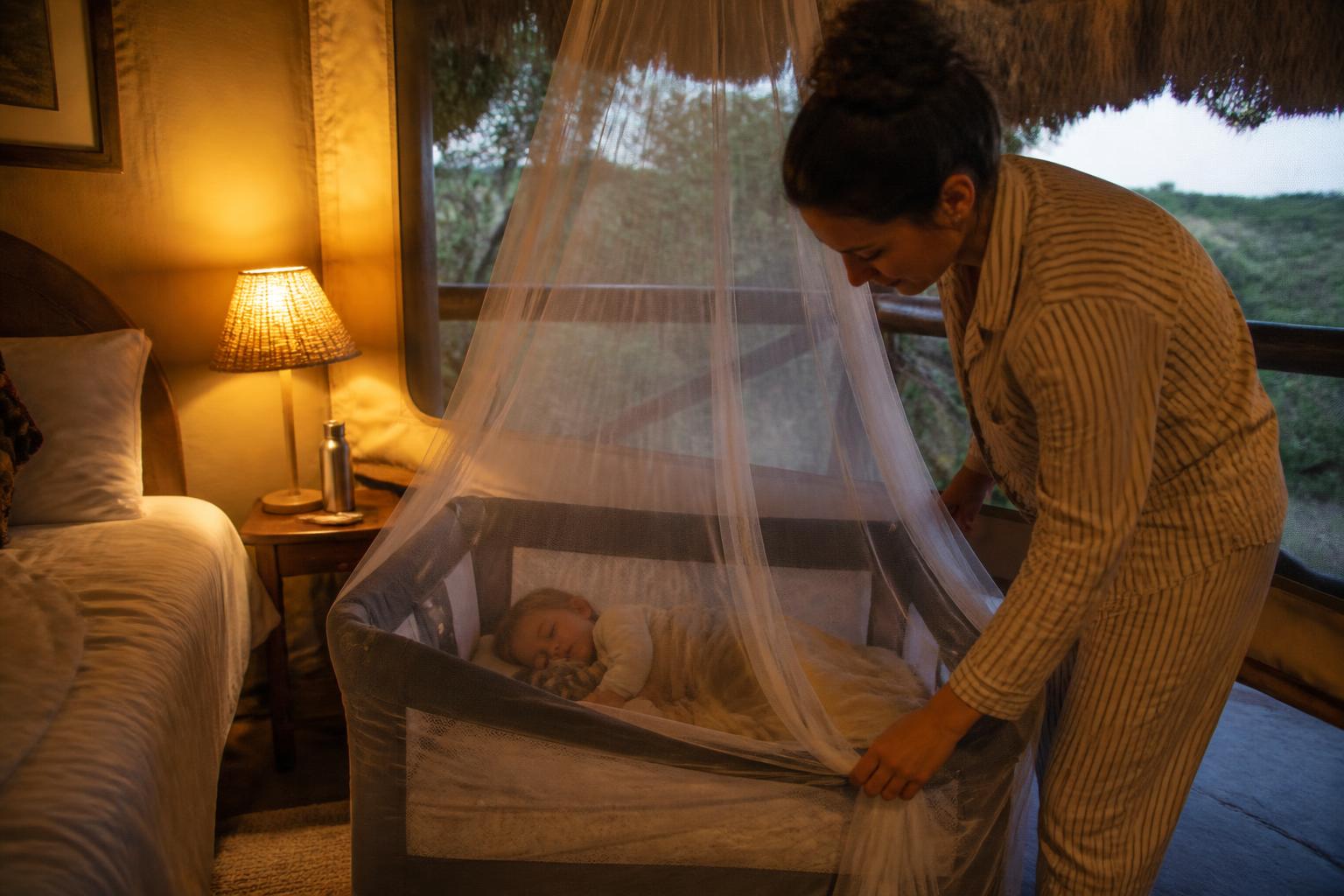
• Pack your own compact mosquito net for a travel cot, since resort nets rarely fit one. Tuck the edges firmly under the mattress rather than just draping them.
• Treat prams, cot nets and clothing with a permethrin spray before you travel, for a second layer that survives a few washes.
• Skip sweet-smelling baby lotions, soaps and shampoos, which can draw mosquitoes in.
• Only burn coils or use plug-ins in ventilated spaces, never right beside a sleeping, unsupervised child.
After you’re home
Malaria can surface anywhere from a week to six months later. Any fever, chills or flu-like illness in that window is malaria until proven otherwise. Tell your doctor exactly where you travelled and get tested within 24 hours.
This isn’t medical advice. It’s guidance drawn from South African moms’ own experience alongside standard prevention guidelines. Always confirm prophylaxis and dosing with a travel clinic, GP or pharmacist, and rather avoid travel to a malaria area with a young child if you can.
Disclaimer: Opinion piece. The views expressed on this page are personal reflections and do not constitute medical advice, professional guidance, or verified fact. Always consult a qualified healthcare professional for medical concerns.