When I Realised I Should Already Be Brushing My Baby's Teeth
The Mothers Block · · 3 min read
#baby#dental#teeth#oral care#parenting#health#opinion
Opinion piece. The views expressed in this article are personal reflections and do not constitute medical advice, professional guidance, or verified fact. Always consult a qualified healthcare professional for medical concerns.
There are a lot of things that catch you off guard in early motherhood.
How loud a newborn can be when they sleep. How many snacks toddlers can eat in a single day. And, surprisingly, how early you're supposed to start brushing your baby's teeth.
Like many parents, I assumed tooth brushing would become relevant much later, maybe when my child had a proper little row of teeth or was old enough to stand at the sink with a toothbrush of their own.
But the truth is, dental care actually starts far earlier than most of us realise. And once I learned that, it completely changed how I approached it.
It Starts Before You Even See a Tooth
Before babies even have teeth, their mouths still need care. Something I didn't fully appreciate at the time is that milk, whether breastmilk or formula, leaves residue behind in the mouth. Bacteria love that environment.
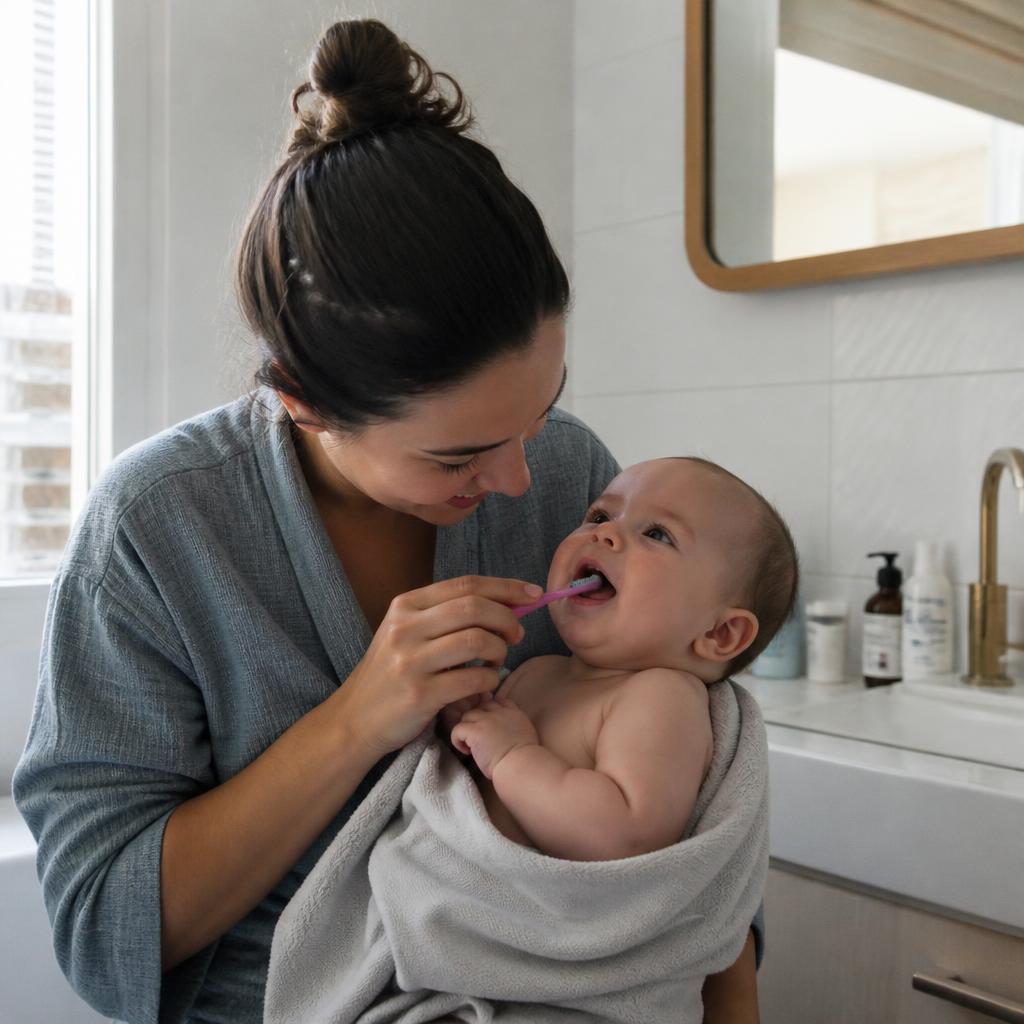
Many pediatric dentists recommend gently wiping your baby's gums with a soft damp cloth or a silicone finger brush after feeds, especially before bedtime. It's simple, quick, and it helps keep their mouths clean while also getting them used to the feeling of oral care early on.
And when you think about it, that makes a lot of sense. Babies adapt to routines so much more easily when they start young.
Starting early makes all the difference. A gentle routine now builds healthy habits for life.
The Moment That First Tooth Appears
When that tiny little tooth finally breaks through the gums, often somewhere between four and seven months, it suddenly becomes more than just adorable. It becomes something that needs brushing.
That first tooth might seem small and harmless, but it's already vulnerable to cavities. The bacteria that cause tooth decay don't wait for a full set of teeth to show up.
At that point, the recommendation is to use:
• A soft baby toothbrush
• A tiny smear of fluoride toothpaste, literally about the size of a grain of rice
• Brush twice a day
The routine usually works best in the morning and before bedtime, when milk or food residue has had the most time to sit in the mouth.
The Reality of Brushing a Baby's Teeth
Of course, knowing you should brush your baby's teeth and actually doing it are two very different things.
Some babies are curious and cooperative. Others clamp their mouths shut the moment they see anything heading toward their face. Most go through both phases depending on the day.
A few things that help: making it playful, brushing your own teeth at the same time so they can see you doing it, using a toothbrush with their favourite colour, or singing a short song to mark the time. Whatever works for your child, the consistency matters far more than perfection.
The goal at this age isn't a spotless clinical clean. It's building familiarity and routine, so that as they grow, brushing teeth simply feels like a normal part of the day.
No parent gets it right every single time. But starting early, even imperfectly, makes a real difference in the long run.
If you're looking for a trusted paediatric dentist in Johannesburg, The Mother's Block directory includes health professionals who specialise in little ones. Because the earlier you start, the easier it gets.
Disclaimer: Opinion piece. The views expressed on this page are personal reflections and do not constitute medical advice, professional guidance, or verified fact. Always consult a qualified healthcare professional for medical concerns.